Food Hygiene for Restaurants & Cafés
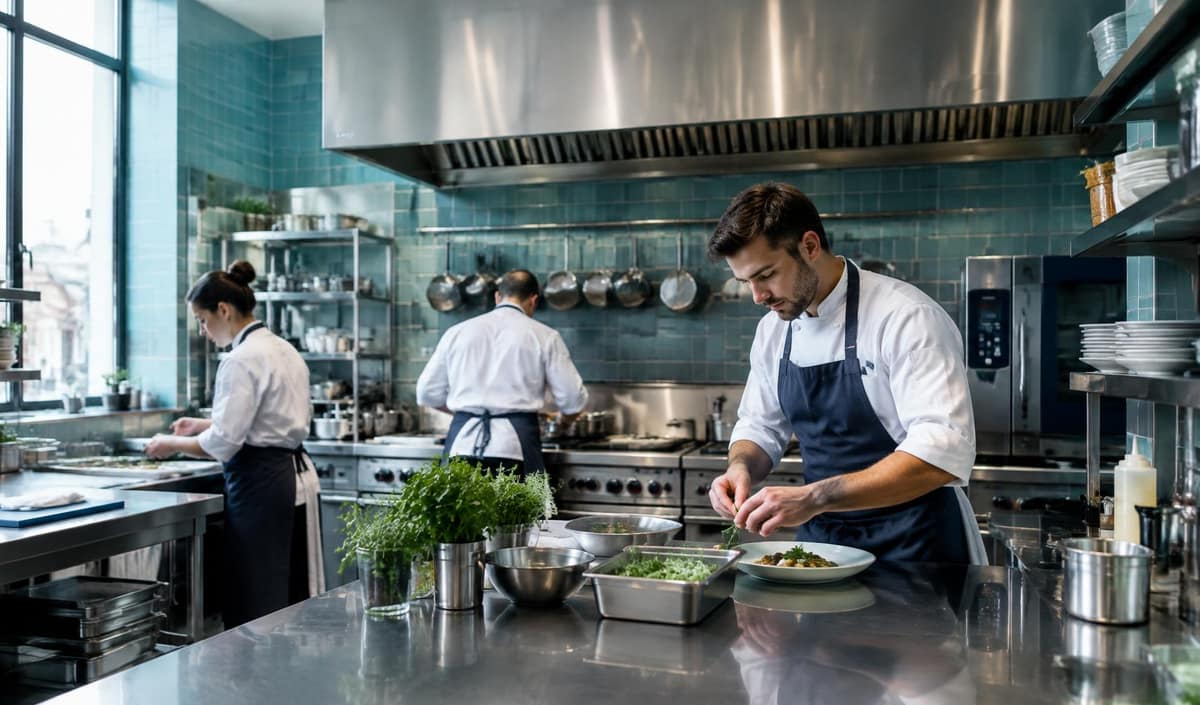
Busy services, mixed menus and constant customer questions about allergens make restaurants and cafés a demanding environment for food safety.
Recommended courses
A starting point for this kind of work. Your employer decides what your role needs.

Who this is for
- Chefs and kitchen assistants
- Baristas and front-of-house
- Managers and owners
Relevant topics
- Kitchen workflow
- Allergen communication
- Opening and closing checks
Typical food safety risks
Service pressureShortcuts at peak times, such as skipped handwashing or probing.
Allergen requestsMiscommunication between front and back of house.
Prep-ahead storagePrepared items stored too long or left uncovered.
FAQs
What should front-of-house staff take?
Many front-of-house staff take Level 1 or Level 2 plus Allergen Awareness, depending on their duties. Your employer decides what your role needs.
Must allergen information be written down?
The law says it must be available, and it can be given in person if a clearly visible notice says how to get it. FSA best practice for England, Wales and Northern Ireland recommends written information plus a conversation. Food Standards Scotland publishes its own guidance.
Our certificates are private training certificates of completion, not regulated qualifications. UK law does not require one specific food hygiene certificate. It requires food handlers to be supervised and instructed or trained appropriately. Employers decide what training each role needs, and a certificate does not replace practical instruction or supervision.