
Food Hygiene for Manufacturing
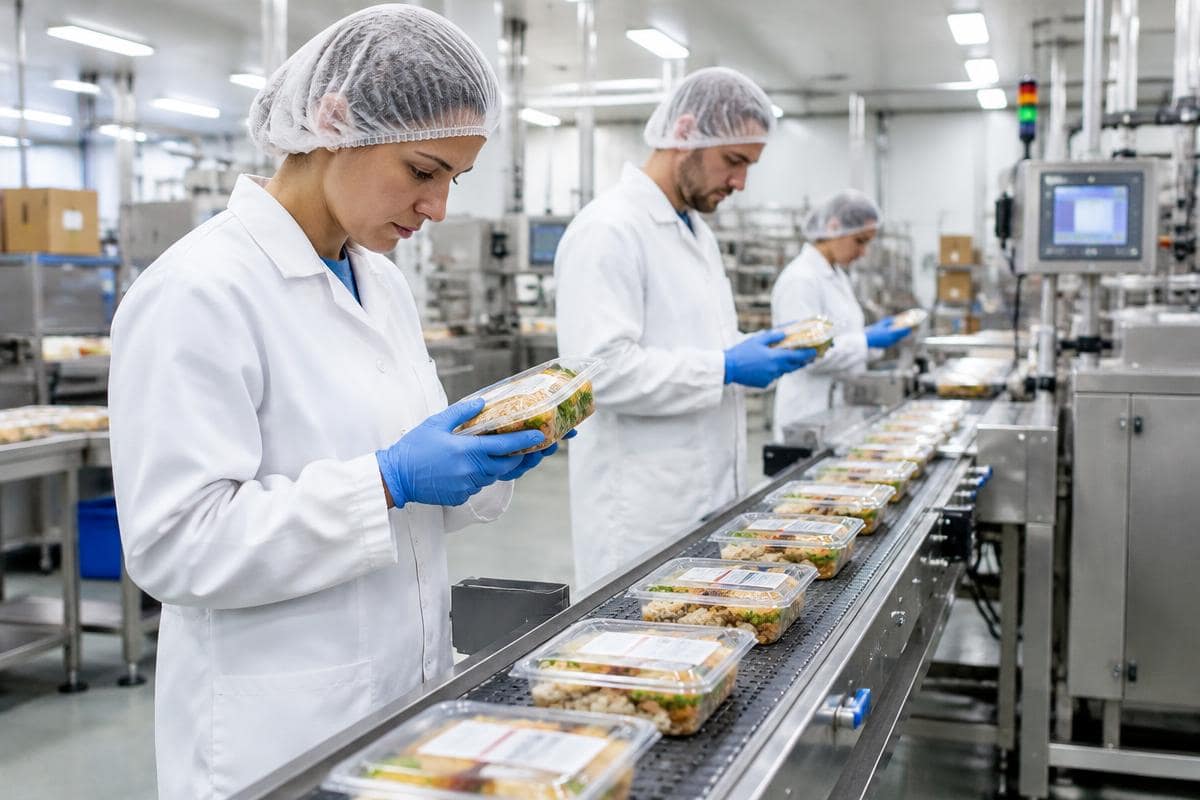
Manufacturers operate under detailed HACCP plans, customer standards and often third-party audits. Hygiene training should support site procedures, not replace them.
Recommended courses
A starting point for this kind of work. Your employer decides what your role needs.


Who this is for
- Production operatives
- Hygiene and cleaning teams
- Quality and technical staff
- Line leaders and supervisors
Relevant topics
- Hygiene zoning and PPE
- Foreign body control
- Allergen changeovers
- HACCP monitoring
Typical food safety risks
Foreign body contaminationMetal, glass, plastic and jewellery from equipment or people.
Allergen changeoversIncomplete cleaning between allergen and non-allergen runs.
Listeria in chilled environmentsListeria can grow at chill temperatures, so drains, condensation and hard-to-clean equipment need attention.
Labelling errorsWrong packaging or missing allergen declarations can lead to recalls.
FAQs
Does this replace site induction?
No. Online training complements site-specific induction, procedures and supervision. It never replaces them.
What training does a HACCP team need?
People responsible for HACCP-based procedures must have adequate training. Many sites use HACCP Level 2 or Level 3 for this, but your employer decides what your role needs.
Our certificates are private training certificates of completion, not regulated qualifications. UK law does not require one specific food hygiene certificate. It requires food handlers to be supervised and instructed or trained appropriately. Employers decide what training each role needs, and a certificate does not replace practical instruction or supervision.